Sunday, February 28, 2016

The Bolivian Water Wars - Corporations and Revolutions

International corporate conspiracy, fighting in the streets of Bolivia with tear gas and bullets and a power struggle at the highest levels of international politics and business; it sounds like something from a James Bond novel, but it actually happened in Bolivia in 2000. High in the Andes, trouble had been brewing for fifteen years, but no-one expected it to boil over for the right to drink a glass of water.

Problems for Bolivia
Hyperinflation destroyed the Bolivian economy in 1985, rising at an incredible 25,000%. Foreign investment possibilities were destroyed, and in the financial crisis the World Bank stepped up to loan the government money when no-one else would. As condition for it support, the Bank demanded steady privatization of Bolivian facilities, including airlines, telephone networks and railways. Our story begins in 2000 when, according to The Economist magazine, the World Bank told Bolivia of the possibility that it would not 'renew' a $25 million loan. To secure the loan, the government needed to privatize its water systems, based on concerns about the efficiency and sustainability of the state system.

Enter the Consortium
Bolivia set the wheel in motion to privatize. Only one bid was put in for the state agency SEMAPA; a consortium called Aguas de Tunari formed by foreign corporations Bechtel Enterprise Holdings (USA), International Water Limited (England) and Edison (Italy). Aguas de Tunari projected a water network to provide drinking water to all of the people of Cochabamba, a city in central Bolivia. This was set to double the existing coverage area and also introduce electrical production to more of the region. The Bolivian government under President Hugo Banzer agreed to the terms of its sole bidder Aguas del Tunari and signed a $2.5 billion, 40-year concession to provide water and sanitation services to the residents of Cochabamba, as well as generate electricity and irrigation for agriculture.

Warning signs
To legally support the contract, the government passed Law 2029. Concerns arose amongst Bolivians that it would lead to a monopoly on all water resources; for example, the communal irrigation resources used by farmers that had been independent of regulation. Previously free water could be charged at the discretion of Aguas del Tunari.

Nasty surprises
As soon as they took control of the water supply, the consortium started making some unpopular changes. A 35% rate hike to an average of $20 a month put incredible strain on Bolivian families, the average which earned a monthly income of about $100. Increases were justified as payments towards a dam project. A manager for the consortium made matters worse by threatening to shut off water supplies if Bolivians were unable to pay. The poor quickly joined in protest; their numbers increased when the middle class and business owners lost their government subsidies and their rates also rose.

Panic in the streets
The response to the rate increase began in in January 2000 with a 4 day strike and boiled over into a national state of emergency that created various violent clashes, resulting in numerous injured police and protesters and five deaths. After a televised recording of a 17 year old being shot to death by a Bolivian army Captain, public outcry forced the police to tell the executives of Aguas de Tunari who had been relying on their protection that their safety could no longer be guaranteed. The executives fled to Santa Cruz and resistance to civil protests dissolved. Within days the leader of the resistance, Oscar Olivera, signed an agreement that pushed Aguas de Tunari out of Bolivia and turned Cochabamba's water resources over to the state facilities, revoked Law 2090 and released all the detainees from the conflict.

The aftermath
It all sounds like a happy ending, but for the $40m lawsuit filed by Aguas de Tunari against the Bolivian government for being forced out of Bolivia and violating their mutual contract. The lawsuit was eventually dropped in 2005. In Cochabamba water prices have dropped to pre-2000 levels, but service and supply are still poor and SEMAPA is even more burdened by inefficiency. With an unsuitable budget to expand resources and develop what already exists, Cochabamba seems to be in the bizarre position of exactly where it was fifteen years ago, but with the history of a very messy conflict.

So what do we take away from this story? There's the obvious problem of international corporate interests paying little attention to the needs of the population that they were supposed to be serving, but that's not the most disturbing insight. The reason for the violent and passionate protests by the Bolivian people was due to the fact that they were having their access to water taken away. It's a common saying that "Water is life"; as oil becomes scarce, will we see water become the new global commodity? We can live without oil, but what would happen if our water supply was passing through political or commercial interests?

Gary Sargent is the Managing Director of the tour companies Escaped to Peru and Escaped to Latin America and has lived in South America for over 10 years. Gary is passionate about life here, the people, customs and places. To learn more feel free to click on the links below:

http://www.escapedtoperu.com
http://www.escapedtolatinamerica.com

Toll Free USA / Canada 1-800-305-6543
Free Phone UK 0-800-680-0617

Thursday, February 11, 2016

Visit Bolivia - Coroico's Budget Friendly Nature Getaway

The country of Bolivia is probably not a well known place for many tourists probably because it is one of the highest and most remote countries in the world. However, this place on earth is actually one of the best areas to spend a nature getaway.

Coroico is one of the best places in Bolivia to visit. Situated specifically in the Yungas region, the town overlooks the scenic foothills of Andes mountain ranges, and is a frequent access point harsher and more rugged mountainous landscape of the northern region. Coroico experiences nice warm climate and possesses calm and relaxing ambiance, making it an ideal retreat spot. The suitable environment in Coroico is also a perfect site to engage in activities like jungle hiking, waterfall trekking, wildlife viewing, and following trails set by the ancient Inca tribe. When you visit Bolivia do not miss seeing the Cotapata National Park, a small natural reserve that houses highly diversified ecosystems. Just three hours from Coroico, is the ancient rock paintings called the Kellkata Petroglyphs.

Unlike other high-profile tourist destinations, you don't have to spend too much money or deal with boisterous crowds to experience a great nature getaway. When you visit Bolivia, the view of the valleys and mountain from the town is already an attraction in itself. In fact, a number of tourists are content staring off into the scenic surrounding while drinking the local coffee or tea the town is known for.

Best Places in Bolivia

Aside from the budget friendly nature getaway in Coroico you can also visit numerous places of interest around the town. For instance, you can go for a tour around plantations for coffee and banana, and the citrus orchard. Expose yourself to the agricultural heritage of the locals and visit the distinct villages in the area like the Jewish-community of Charobamba and the Afro-Bolivian community called TocaÒa.

The rivers (rio in Spanish) of Kory Huayco, San Juan and Coroico are also few of the best places in Bolivia that you ought to see. It is simply near to the town and are great spots to have a refreshing swim and lovely picnic. The nearby Huarinillas River is a favorite spot for thrill seekers as its strong currents are ideal for rafting. Guided tours are available for those who like the see the beautiful waterfalls in the area. When you visit Bolivia, you should not be contented without seeing its notable spots such as the Paradise Falls, Perolani waterfalls and Pozas del Vagante.

History

Ironically, some of the best places in Bolivia have a deadly history. For instance, the Yungas Road that runs from La Paz to Bolivia's Amazon rainforest region in the north of the country has been dubbed the "World's Most Dangerous Road because of its scary downhill direction. Based on statistics, it is the most dangerous road in the world, killing 100 to 300 people every year. But despite its frightening view, it is one of the favorite places that bikers and adventure-seekers love to go. If you are confident with your biking abilities, then you can join the ranks of the few tourists who dare to bike on this road as part of your nature getaways. Other less-risky mountain biking trails are also available within the town's vicinity.

Your nature getaway in Bolivia is made more convenient with the availability of affordable hotels and accommodation. From big luxurious hotels to eco-lodges, Bolivia hotels offers the best price and service. You can also have a delightful dinner at one of many Coroico's restaurants, which serve both international and local cuisines. To make your night more fun and memorable, head out to some of the several cafes, bars and small clubs, which are located near the best places in Bolivia.

To get a daily doze of inspiration of the best travel destinations in the world please visit: Traveler Dreams

Thursday, February 04, 2016

Silver Mountain - Rags and Riches in Bolivia

At more than 13,000 feet above sea-level in the Andes, we were as close to heaven as most mortals can hope to get - and closer to hell than anybody would want to be.

A group of miners steadily chewed coca leaves, mixing the wad with ash. They claimed it immunized them against cold and hunger. Armed with carbide lamps, most not wearing safety helmets, they began to file into the mine, ducking to avoid broken timbers, crawling through puddles.

I thought about the dark stains smearing the mine entrance. They were from the blood of the llamas ritually sacrificed to appease El Tio, the devilish deity who rules underground.

Coca juice numbed my mouth and claustrophobia gnawed at my stomach. My heart thumped with the exertion at this altitude. What the devil was I doing here, deep in the depths of Cerro Rico (rich hill), the mountain that broods over Potosí in Bolivia?

The astounding wealth below the surface of the cone-shaped hill, called Sumac Orcko ("beautiful hill") in the Quechua tongue, was discovered by Diego Gualpa, an Indian, in April, 1545. One story says he detected silver when his llama scratched the earth.

If Diego had known how much suffering his find was to bring to his people in the former kingdom of the Incas, he would surely have kept quiet. But five rich veins were located close to the surface, the mountain was renamed Cerro Rico and soon Potosí had 160,000 inhabitants, a colourful mixture of officials, traders, desperadoes, and millionaires, plus at least 800 professional gamblers and 120 prostitutes.

From its mines poured an estimated 46,000 tons of silver, worth anything from US$5,000 million upwards in modern terms. It brought undreamed-of wealth to a handful of adventurers, adorned churches and palaces, and helped pay for Spain's Great Armada and a series of wars. It also brought misery and death to thousands of Indians forced to work below ground.

In Potosí only the best was good enough for the silver barons. They competed in licentiousness and conspicuous consumption. They shipped their finery back to Paris to have it properly dry-cleaned while their ladies wore elegant shoes with heels of solid silver.

Today the city, declared by UNESCO a World Heritage site, is remote and sleepy and conditions underground are still perilously primitive, as I learned when a young student guided me through some of the 785 kilometres of tunnels honeycombing Cerro Rico. Little silver comes out these days for the most accessible veins are exhausted.

Tin replaced it in importance, making fortunes for a lucky few. But, after the bottom fell out of the tin market in 1985, thousands of miners lost their jobs and only a few mines struggle on.

The dream of easy wealth contributed to Spain's stagnation, helping to impoverish it for centuries. The riches of the Indies were frittered away - and that perhaps is the revenge of Potosí.

Those who carried off its treasure were left with nothing either. Except memories of the silver rush, enshrined in a popular Spanish phrase: "Vale un potosí! It's worth a king's ransom!"

Journalist and author David Baird has worked all over the world but is now based in Spain. His book about a little-known conflict that raged in the 1940s, Between Two Fires - Guerrilla War in the Spanish sierras, has won praise from such leading historians as Paul Preston and Ian Gibson. His latest books are works of fiction. Typhoon Season is a thriller set in Hong Kong. Don't Miss The Fiesta! is a tale of passion and adventure set in southern Spain. More information at the Maroma Press website, http://maromapress.wordpress.com/

Sunday, January 31, 2016

Backpacking Inspiration - 1 Month - Peru, Bolivia and Chile

The natural untouched beauty of the mighty Andean mountain range, the majestic Inca ruins of Machu Picchu and Lake Titicaca Islands that are barely affected by the modern world. Street markets and Andean culture in Bolivia, sand-boarding in the Atacama Desert and 4x4 drives across the Bolivia salt flats. All this can comfortably be experienced in around a month travelling through this awe-inspiring corner of South America.

Below is a suggested one month backpacking itinerary, starting and finishing in Peru and travelling by bus throughout.

Fly into the ancient Inca capital of Cusco, Peru. With Machu Picchu on its doorstep, Cusco is a tourist hot-spot where you can organise tours into the Amazon rainforest, explore Inca culture and history, become acclimatised to the Andean altitude, and see the many Inca ruins, most notably the Inca city of Machu Picchu. If you're into trekking, the 4 day Inca Trail finishing at Machu Picchu at sunrise is a must. In and around Cusco, there's a wide selection of museums, galleries, Andean villages and markets to explore.

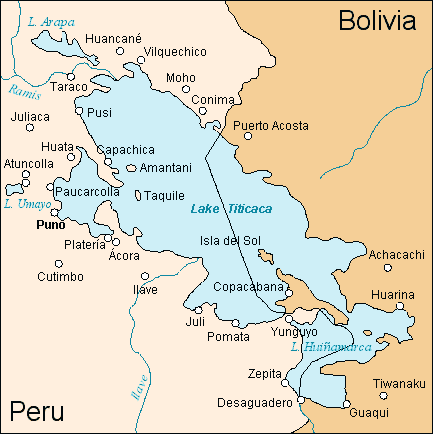
From Cusco, head to Puno on the shores of the enormous Lake Titicaca. Whether you book onto a tour or just turn up at the pier and get on a boat is up to you, but you won't want to miss a trip to the remote islands on Lake Titticaca. The floating reed islands are postcard-perfect and on Isla Amantani, staying with a local family will give you a real insight into life in this remote part of the world where life has barely changed for centuries.

Next head by bus to Copacabana, on the shores of Lake Titicaca, Bolivia. The highlight of this is the day trek up the coast to a little village where you can hire a small boat and driver to take you across to Isla Del Sol. The scenery is spectacular, and what a night on Isla Del Sol may be lacking in luxury and comfort (supplies are carried up by mule and water is at a premium), the Island more than makes up for in spectacular scenery and walking opportunities.

Back to Puno and on to La Paz, a major city in Bolivia. One of the highest cities in the world, La Paz is nestled in the mountains which provide a perfect backdrop for wandering the stall-lined streets, and exploring the bustling markets and museums.

From La-Paz, head south and get on a 4x4 tour through the huge salt flats at Salar De Uyuni. You'll end up at the Chilean border and on to San Pedro de Atacama, the centre of tourism in the spectacular Atacama Desert. You can go sand-boarding, mountain biking, horse riding and trekking with San Pedro de Atacama as your base, but however you choose to see it, experiencing the desert should be on your list.

Next, head to the Northern Chile coastal town of Iquique, a place where high desert plains abruptly meet the Pacific Ocean creating spectacular cliffs and probably one of the top paragliding destinations in the world. Amazing climate, familiar food and travelling in comfort will all probably be appreciated in Chile after a few weeks in Peru and Bolivia.

Next, head North to Arica and on to the barely discovered gem, the highlight of Northern Chile; Parc Nationale Lauca. One of the best ways to explore this area is to hire a car in Arica for a couple of days. Stay in a rural village like Putre, and explore the spectacular natural landscapes of snow-capped volcanoes reflected in crystal clear lakes, spot flamingo, alpaca and vicuna and buy Andean handicrafts from the villagers.

Continue North into Peru and head for Arequipa. This beautiful city has lots to offer the visitor, not least a trip into the nearby Colca Canyon. From the village of Cabanaconde on the Canyon rim (about 100 miles from Arequipa), you can trek into the canyon in a few hours where you bathe at the Oasis (sheer bliss) and stay in a hut by the river. Your hosts (a local family - no need to reserve, in fact it's probably not possible to reserve) will cook you a meal, light you a fire and provide you with basic accommodation. The sense of tranquility in such a remote location and the expansive natural surroundings mean a trip into Colca Canyon should feature on every traveller's itinerary.

After another day or so relaxing in the cafes and restaurants of beautiful Arequipa, it's a convenient transport hub for flights back to Lima and home, or on to your next destination.

Excluding the cost of flights and travel insurance, and travelling independently as a backpacker, this trip is likely to cost around $1800 - $2500 per person.

Andrew Marsden is a researcher and travel journalist for [http://www.roam-the-world.com]. Probably the most comprehensive resource on the web for independent travelling costs. Roam The World are passionate about helping you to plan an adventure using accurate and reliable information.

Wednesday, January 13, 2016

Relocating to South America - Living in Bolivia

Bolivia is one of those countries that frustrates you into loving it. Given enough time, its quirkiness is what makes you keep coming back for more. As the second poorest country in Latin America, an adventurous spirit is a must, even if you enjoy a very high standard of living. Certain necessities like road infrastructure, public transport and traffic safety are not the best and the supply of gasoline and natural gas (used by almost everyone for cooking) can be unreliable at times. Lately politics have been rather volatile.

Bolivia is like two countries in one, both physically and culturally. The differences are so noticeable it's just not possible to describe the country as a whole. West-Central Andean Bolivia (with its primarily Spanish, Quechua and Aymara population) was the country's center of wealth for over 400 years but has taken a slight downturn. Still, it is culturally and historically rich. Many foreigners enjoy the comfortable moderate climate of Cochabamba (population 600,000), which is most often compared to Cuenca, Ecuador in terms of altitude, climate, architecture, and culture. Expats here tend to mix quite well with the locals and 'adopt' an upper to middle class Bolivian lifestyle. Many stay and marry Bolivians, making 'Cocha' their second home.

You'll find that in La Paz too, but La Paz is more 'international' with large and very active (and much more temporary or mobile) expat communities that, with the exception of aid workers and missionaries, often don't make great attempts to mix with the locals. You must take the extreme altitude of La Paz, the world's highest capital city, into account. At nearly 14,000 feet a.s.l. (twice as high as Denver), it's not for those who have weak hearts or respiratory problems. Most countries send their diplomatic personnel to La Paz (the seat of government) and there are many missionaries, international NGOs and volunteer organizations because of the high degree of poverty among the indigenous class.

In these two major cities expats live very well, often with a higher living standard than they would in their countries of origin. There are several very large residential neighborhoods that cater to foreigners and the Bolivian upper class with modern schools, churches, shopping malls, supermarkets, country clubs, restaurants and very lively night life. There are many affordable and good quality private Bolivian schools (for those who want their children to learn Spanish) as well as American, British and German international schools (expensive at $150 to $500 per month and an initial one-time membership fee of several thousand dollars, but they conform to US and European school years and standards).

In both cities, and most smaller cities, such as Sucre (Bolivia's capital), you can't escape the colonial architecture and dozens of ornate cathedrals, cobblestone streets, and colorful open markets. There is very little zoning and you'll easily find large mansions mixed in with smaller homes, or surrounded by family-run stores and restaurants, street vendors, and noisy night clubs.

Eastern Bolivia (the lowlands) is for those who enjoy hot (often humid) weather, lots of open space, and a laid back lifestyle. This region went from being completely ignored and having almost no infrastructure for over 400 years to being the nation's economic center (but only has been for about 12 years) and Santa Cruz (population 1.6 million) just recently became the largest city in the country. Its growth is fueled by mass immigration from the West and massive oil and gas fields that are Bolivia's main source of income for the moment. This one state alone contributes nearly 40% of the GNP. The problem lies in that its economy is supporting most of the rest of the nation and with what remains it can't maintain or build new infrastructure fast enough to keep up with its own growth.

Younger foreigners and their children tend to thrive here. There are large American, British, German, Dutch, and Japanese expat communities here as well as thousands of Mennonite families. Santa Cruz has more private schools and universities per capita than any other city (most built during the past 12 years). There are several all-English schools here. Many expats mix quite well with the local culture. Because it is warm 9-10 months of the year, most of the population spends a lot of time outdoors and the city is filled with sidewalk cafés, open-air restaurants and great night clubs. There are numerous open markets and supermarkets, shopping malls, country clubs and import stores. Most families find it fairly easy to live and work here (although rental costs are just slightly lower than in the U.S.) and the locals from Beni to Santa Cruz to Tarija tend to be very hospitable. The international communities are mostly linked to business and agencies for cooperation.

Culturally Eastern Bolivia is different from the Andean West in that the Aymara and Quechua population is immigrant and not native to the region. There are over 20 different indigenous groups here, each with its own language and most are Amazonic. The Guaraní are the largest of these (see the movie The Mission - Jeremy Irons, Robert DeNiro). There are great little towns like Samaipata (2 hours from the city of Santa Cruz), and smaller cities like Tarija (Bolivia's wine country and flower capital) that attract lots of long-stay foreigners and large groups of expat retirees. There is a lot of tropical wilderness to explore here and most tourism is eco or adventure tourism. You can easily take weekend trips or day trips to the dozens of surrounding communities, each with its own culture and attractions.

Aspects you have to take into special consideration and research thoroughly before you move here include the altitude in the West, fairly high rental costs if you want the standard you are accustomed to, and expensive international schools. You also have to consider your health as medical care is severely lacking throughout the entire country. Even with great long-term international medical insurance some meds and technology are just not available. If you plan to live and work here, you cannot arrive on a tourist visa and later request residency. It's fairly easy to set up a business here, but very difficult to find a job if you move here without a contract. There is no one place in Bolivia where you won't soon see severe poverty. Currently the political situation has taken a downturn and there is no tolerance for foreigners who get politically involved, Americans in particular. The food is great and you could learn a new recipe each week for the rest of your life. If you can't tolerate disorderly traffic you'll be doing a lot of walking.

Charis Barks grew up in Latin America from the age of four and as an American expat, third culture kid and missionary kid, relocated to and from various countries in South America, including Bolivia. Growing up overseas gave her a unique perspective she now shares on http://www.boliviabella.com, a website she builds and designs that contains over 1000 pages of first-hand facts and information about Bolivia for expatriates, tourists, businesspeople, volunteers and students. Bolivians and expats alike also contribute to this site by adding pages with their own travel tips and stories, advice and personal recommendations.

Thursday, January 07, 2016

Bird Watching Holidays in Bolivia: Dream Trips for Birders

If you're an avid bird watcher looking for your next intrepid adventure, why not consider Bolivia? Famous for its prolific birdlife, Bolivia offers plenty of opportunities to spot many of the 850 species that reside here. Its diverse geography and range of ecosystems provide the perfect habitats for the different species.

A trip to Bolivia makes for a fascinating and memorable experience but, before you book, make sure you do some research on the bird watching holidays on offer. You should book with a company that offers small groups, a local tour leader, and a varied itinerary to ensure you get the most out of your once in a lifetime visit to this spectacular country.

Highlights of Bolivia

Most bird watching holidays to Bolivia include Amboro National Park on the itinerary, which, because of its incredible range of flora, is home to an astounding number of bird species, including Flycatchers, Tanagers, hummingbirds and Antbirds. This ecological hotspot covers half a million hectares and encompasses three main ecosystems: the Amazon basin, the northern Chaco and the Andes. The mountainous region towers above the extensive lowland areas and, consequently, both highland and lowland animal and plant species are found here.

Los Volcanes is home to several species that are endemic to the area. The Grey-checked Parakeet, Black-streaked Puffbird, Bolivian Recurvebill and the Yungas Manakin are among the many unusual inhabitants to be found in this reserve. It is thought that 170 different avian species live here, which is extremely high considering its habitat and elevation. Experts attribute the diversity to the fact that the forest includes both deciduous trees and evergreens. The well-mapped trail system makes for ideal access to all areas of the reserve for those on guided bird watching holidays.

Because Bolivia is home to the Andes, it has extensive areas of semi-deciduous woodlands in the foothills and other areas of shrub desert. These particular regions offer the perfect habitat for the Red-fronted Macaw, the Red-tailed Comet and the Yellow-billed Tit-tyrant, all sought after species for the avid bird watcher.

Bolivia also boasts the stunning cloud forest of Siberia, a unique ecosystem that is made up of north-south valleys sheltered by the Andes from the extreme Amazonian weather. Comarapa is an area of cloud forest in the Serrania de Siberia where the Rufus-faced Antpitta is often spotted, along with the Golden-headed Quetzal and the Pale-legged Warbler. In the transition zone, where the cloud forest meets the drier valleys, the Ringed Warbling Finches are a common sight.

Bird watching holidays to Bolivia are perfect for those with a long list of exotic birds on their wish list, and a trip to this stunning region of South America will certainly be one to remember.

Marissa Ellis-Snow is a freelance nature writer. If you're looking for bird watching holidays, Naturetrek specialises in expert-led natural history and wildlife tours worldwide. Naturetrek brings over 25 years of experience to polar expeditions and tours to other spectacular regions on Earth.

Saturday, January 02, 2016

Places of Interest on Your Holidays in Bolivia

Who would have guessed that one of the poorest countries in South America has the rich and exciting destination of the vastly differing Amazonian and Andean landscapes and the remnants of mysterious ancient civilization? This is the destination for people who are looking for untamed traditions and beliefs because 50% of the population maintains their traditional values and belief.

One of the popular attractions of Bolivia is the Lake Titicaca located in La Paz. The lake is regarded as the highest lake with a depth of 12, 580ft and which covers 3,861 square miles. This lake is attributed to its majestic roots. Around the lake there are two major islands, the Islas del Sol and Isla de la Luna, which are in high regard as they are the mythical sites of the creation of the Inca people.

According to legend, the Sun God sent his son and daughter to earth to improve the way of life of the Andean people, and so they descended unto Islas Del Sol and founded the Inca Empire. There are stunning views across the lake to the snow-capped peaks of the Andean range. The islands themselves are incredibly picturesque.

Tourists can see fishermen sail by on handmade reed boats. Present on the lake shore are the llamas and alpacas herded along the mountain paths to villages scattered on the hillsides. Along the way, there are a few Inca ruins, among them the Sun Temple and the Chincana complex on Isla Del Sol and the Inca stairways.

Another big attraction of Bolivia is the Rurrenabaque, the starting point for a trip to the Amazonian pampas and jungle. This is suitable for lovers of nature and wildlife. It is considered the loveliest of the Bolivian lowland villages. Tourists can have a ride on the dugout canoe as they cross the river in Rurrenabaque. The rainforest and pampas are abundant in wildlife. There are anacondas, capybaras, monkeys, turtles, macaws, caymans, piranhas, and the beautiful pink dolphins. There are also a plenty of birds life to be seen and heard.

For tourists looking for a photographer's delight, Salar de Uyuni must be the place to stay. It is the world's largest salt desert set in elevation of 11, 970 ft and filled with an estimated 10 billion tons of salt. It is considered as one of the most spectacular natural attractions in Bolivia. It is a superb landscape combining salt pans, wind-eroded rock formations, and wandering llamas in a completely unspoilt region. At the center lies the Isla de Pescadores, it is a landmass appearing as a mountain out of the white nothingness. In Sala de Uyumi, there are plenty of other marvellous sites such as the Laguna Colorada and Laguna Verde. These lakes are homes to flamingos and are surrounded by extinct volcanoes. Also surrounding them are bubbling mud pools.

There is also Bolivia's famous museum, the Casa Real De Moneda. It was originally the Royal Mint House, where the colonial Spanish transformed the silver from the mines into coins. It is one of Bolivia's best museums that explain the history of silver production and its influence. Aside from silver coins, they also display restored presses and wooden minting machines, coins and coin stamps and religious art.

The other must see attraction is the Mercado de Brujas or the Withches Market. It is one of the most bizarre markets in the world. Merchandise sold here are fairly odd, things such as herbs and remedies used in any traditions to potions, charms, and dried llama foetuses. Available also are the Andean art and handicrafts.

The other must see attraction is the Mercado de Brujas or the Withches Market which you can visit if you rent one of the many holiday cottages. It is one of the most bizarre markets in the world. Merchandise sold here are fairly odd, things such as herbs and remedies used in any traditions to potions, charms, and dried llama foetuses. Available also are the Andean art and handicrafts which you can buy when you come here on self catering villa holidays [http://compareaway.co.uk/villa-holidays].

Wednesday, December 30, 2015

Bolivian Cuisine And Recipes From Bolivia

There is more than one cuisine in Bolivia because every region has its own favorite dishes. Food tends to be spicier in the west of the country, where you will find the arid Andes mountains and valleys, than in the lowlands of the east. Bolivian food is similar to Peruvian cuisine in some ways, since these countries share a border as well as similar topography.

There is a lot of variety of grains, vegetables, and fruits in the tropics, which are in the north and east of Bolivia, since this is the agricultural center of the country. Most of the cattle ranches are in the east. You can imagine how the differences between climate, topography, and altitude mean that the food eaten on one side of the country differs substantially from the food enjoyed on the other.

Bolivian Chicken Soup

This recipe is for chicken soup, which is known in Bolivia as "chanko de pollo." You can see from the ingredients list how simple this soup is but the flavor is really good.

This is a very nutritious recipe and you can make it as thin or as thick as you like. If the soup is too thin, remove some of the liquid before you add the beans, parsley, and onions or cube the potatoes and then put them back in so the starch can thicken the soup.

What You Need:
  • 1 cup butter beans or broad beans
  • 1 chopped chicken breast
  • 1 tablespoon chopped parsley
  • 4 peeled whole potatoes
  • 3 tablespoons chopped green onions
  • 1/2 teaspoon butter
  • Salt and black pepper, to taste
How To Make It:

Boil the chicken in a quart of water with the white part of the green onion for twenty minutes. Boil the beans for half an hour in salted water. Add the potatoes whole when the chicken is half-cooked.

Melt the butter in a small pan over a low heat and stir in the parsley and remaining green onion. Cook, stirring, for a couple of minutes. Take the beans out of the pot and strain the water off. Add them to the soup with the parsley and green onions. Season to taste and serve hot.

Coconut Candy

People with a sweet tooth might enjoy this one. Coconut candy is known as cicadas in Bolivia and this recipe is from the Tarija region. This recipe makes about thirty candies.

Mix three cups of shredded coconut with a cup of condensed milk, quarter of a teaspoon of almond extract and an egg in a bowl and let it rest for a few minutes.

Spread some butter over a baking sheet and dot small amounts of the candy mixture on there, using a pair of teaspoons. Bake at 325 degrees F for twenty five minutes or until the candies are dry, smooth and golden.

Christine Szalay-Kudra is an author, food expert and mom of four boys. She is the owner of the Recipe Publishing Network, a group of sites dedicated to fine food and information for cooks. When not busy with her business you can find her sharing on one of these social networks at her own URL: http://www.recipepublishingnetwork.org/

Thursday, December 24, 2015

Bolivia Real Estate Listings Are Quite Cheap But Remain Unnoticed

The official name of Bolivia is a peculiar: Pluri-national State of Bolivia. It is situated in central South America as a land-locked country, though it has a limited access to the Atlantic Ocean through the Paraguay River.

Bolivia has Sucre as the constitutional capital, while the seat of the government is La Paz. Spanish is the main language, while another 36 languages are also spoken in this country and had been recognized as official languages. Bolivia is ranked twenty-eighth largest in the world with a land area of nearly 1,010,000 sq. km. and the population of the country is about 10 million.

The lowest GDP per capita in entire South America prevails in Bolivia, in spite of rich natural resources, particularly petroleum and gas reserves. In fact, the natural gas reserves of Bolivia are the second largest in South America. Poverty levels hover around 60%. The annual growth rate was around 2.5% in the beginning of the decade. However, the political upheavals had stunted the growth of Bolivia severely in the last 7-8 years. Tourism industry had been growing in this decade slowly, contributing to some economic growth and Bolivia real estate activity.

Real estate in Bolivia is expected to grow in the coming decade strongly due to the low property prices, compared to other Latin American countries. However, international investors had not fully realized or appreciated the potential of Bolivia for sale and Bolivia rentals. The main reason is that Bolivia is a mountainous country, further hidden by larger countries like Brazil, Argentina, Chile, Paraguay, and Peru. The Andes Mountains attract adventure tourists and visitors that like the old Inca ruins Biking on the Death Road from Yungas, the origin of the Amazon Basin is the favorite sport of thrill seekers in Bolivia.

However, the tourists who prefer beaches and resorts head to these other countries. Hence, the Bolivia real estate listings had not come to the attention of international investors in a serious manner. Bolivia property prices cost less than half the amount for the same type in the United States, which is unknown to many foreigners.

The land reform policy implemented by Evo Morales elected as President of Bolivia in 2005 had somewhat complicated the prospects of Bolivia listings. The new policy requires that large estates be broken up and the small parcels redistributed to the impoverished citizens of Bolivia. This reform was necessary to change the situation, where about 10% of the population owned around 90% of the landed property of Bolivia.

However, the new regulation does not affect business buildings and properties below 12,000 acres. Hence, buying Bolivia real estate for sale or investing in Bolivia rentals is not a difficult proposition. Any local citizen or a foreigner could purchase a condominium or a nice house for less than $50,000. Still, financing options are very limited and cash transactions are the general norm. A home with built-in area of 1,200 sq. ft. on a lot of 8,000 sq. ft., situated 3 miles away from the Central Plaza of Santa Cruz city, costs only about $60,000. Could there be better investment options for international investors than such Bolivia real estate for sale and Bolivia rentals? What is required is a long-term investment approach.

International Real Estate Listings.com is the worldwide leader in international real estate for sale, international real estate exchanges, and international rentals. International property owners, agents, and developers are encouraged to create an account, upload an unlimited number of listings, write as much creative property details, include a YouTube property video, and it will be activated as a Basic Listing for 6 months, free.

Monday, December 14, 2015

10 Things I Like About La Paz Bolivia

"I don't think travelers come here to unwind." Not only will you feel shortness of breath in La Paz because of high altitude, the city's steep roads are a challenge even if you are super fit. La Paz is the highest capital in the world sitting at 3636 meters (12,000 feet) at a steep canyon on the altiplano.

La Paz is one of the most fascinating cities in South America and here are 10 things I like about La Paz Bolivia:

Ten: It is the cheapest city in South America

Our cheapest dinner was at Jackie Chan Chinese restaurant for four including water and beer was US$5. Dinner at a touristy restaurant called Sol y Luna with three entrees, one pisco sour, two fruit juice and one bottled water for four was US$34.

Teatime with two salteñas, one empanada and one apple pie was US$5 at El Montanes Café on Calle Saganaga (across the street from the popular Café del Mundo). The teahouse serves the best salteñas in Bolivia.

Six bottles of one and a half liters bottles of mineral water were US$2.

Nine: Plaza San Francisco

Locals and tourists congregated at the plaza during the day and night. Colonial buildings, street markets, vendors, shops and the church and monastery of San Francisco surround Plaza San Francisco.

The church was built in 1549 and depicted the mix of Spaniard and indigenous influences. This mestizo-baroque façade has a blend of Catholic images and indigenous symbols like birds, snakes, dragons and faces. The Plaza San Francisco is a great place to have a feel of La Paz- where you can spot cholas in Bowler hats and traditional skirts, men and women selling all types of souvenirs and food, musicians, tourists and vehicles like old buses.

Eight: Old buses

Mini or regular buses in La Paz are mostly old and tattered with beautiful colors and drawings. Though these buses are not fuel efficient vehicles and are bad for our lungs, they do give La Paz a different feel from other South American countries.

Seven: Steep cobblestone streets

You will have a good workout walking up and down the steep cobblestone streets of La Paz. The high altitude took my breath away every time I walked up Calle Saganaga. I must have walked on that street at least 15 times in my four days stay in La Paz.

These cobblestone streets are filled with local vendors selling food, drinks and souvenirs, street markets and the famous Witches Market.

Six: Witches Market

The colorful Witches Market is filled with scents, potions and lotions, alpaca sweaters, leg warmers, hats, souvenirs, restaurants and llama fetuses. It is a must-see in La Paz because of the various types of items sold that are unique to Bolivia's culture and traditions.

If you are looking for alpaca-made clothing and accessories, the Witches Market offers variety and great prices. After 10 days in Bolivia, most of these souvenir shops with alpaca-made things began to look the same but if you take a careful look, the Witches Market offers a great variety compared to shops and street markets in Potosi and Uyuni.

Five: Moon Valley

Moon Valley is like a sponge, when it rains it becomes dangerous to walk around the area. It was like walking through huge egg cartons. The Moon Valley offers different trails and you can spend 30 minutes or one hour walking on the trails through rock formations that resembles the 'moon' (I haven't been to the moon, thus the quotation marks).

The Moon Valley is only less than 10 km from the city of La Paz but it is warmer and drier. The valley is quiet and offers an excellent acoustic sound and if you stay silent for a few minutes you could actually hear your own breathing.

Four: Plaza Murillo

This is where the Bolivian government buildings, Presidential Palace, Cathedral and locals gather with pigeons and vendors in the square. One interesting thing I observed was a little girl barely three years old walking straight to a ice-cream vendor to purchase an ice-cream cone.

The Presidential Palace has gunshot holes and is also known as the Burnt Palace because of the many uprising and protests in the area.

Three: The view

La Paz sits in a canyon with an altitude of 3636 meters at the Plaza Murillo, the center of the city. Traveling into the city on an overland truck from Potosi, I will never forget the view of La Paz and the snow-capped Mt. Illamani. These are photos we took from one of the lookout points.

Another lookout point is at Mirador Killi Killi at 3685 meters above sea level. From here you can see the city's skyline including the stadium.

Two: Eating llama meat

Yes, I did eat llama meat and alpaca meat in Bolivia. The best llama meat dish was at Luna's Restaurant on Calle Saganaga. Traveling to me is about trying new food and experiencing the culture and traditions of the country I visit. I had a hard time making myself eat llama meat but I am glad I tried it.

One: Bowler hats and traditional clothing

The most fascinating part of my visit to La Paz was walking and trying to make a conversation with the cholas and cholitas with bowler hats and traditional clothing.

I discovered La Paz, Bolivia is the cheapest city in South America. Your dollar will go a long way in the city. It is fairly safe to travel but never walk or take a taxi on your own during the night. We were told to be careful with our belongings.

Have you been to La Paz? It is definitely worth a visit if you like to visit a country steep in culture and traditions with a hint of westernization like great accommodations and food.

Claudia Looi is a travel copywriter. She spent eight months in South America visiting eight countries with her husband and two teens. You can find her at http://www.travelwritingpro.com

Thursday, December 10, 2015

Interesting Facts About Bolivia's Sports

Did You Know...

Like Un Yong Kim (South Korea), Sheik Fahad Al-Sabah (Kuwait) and Joao Havelange (Brazil), José Gamarra Zorrilla was one of the best Olympic leaders in the Third World. He played a major role in promoting the values of sports in Bolivia and Latin America. José dedicated his life to fight against indifference to sports and the deplorable condition of the athletes in Bolivia. His country is one of the Third World`s poorest countries. Furthermore, Bolivia has had a record 194 attempted coups. However, under his leadership, several international congress and events were organized in La Paz, Cochabamba, Oruro and Santa Cruz de la Sierra. José was president of the Organizing Committee of the La Paz Bolivarian Games (1977) and for the South American Games in Bolivia (1978). As president of the Bolivian Olympic Committee (1970-1982), he led Bolivia to the best result ever in its history: 106 medals in the South American Games. He headed the Bolivian delegation at the Summer Olympics in Munich, West Germany. Many South Americans consider José Gamarra Zorrilla as the greatest South American Olympic leader of the 20th century.

This country had great sportspersons: Mario Martinez (tennis), Alan Saunders (nordic skiing), Milton Coimbra (football), Maria Ortuno (basketball), Giovanna Morejon Irusta (athletics), Ramiro Benavides (tennis), Anthony Iglesias (diving), Johnny Pérez (athletics), Scott Sanchez Saunders (nordic skiing), Oswaldo Morejon (track and field), William Arencibia (taekwondo), Erwin Sánchez (football), Ricardo Ramos (nordic skiing), Guadalupe Yañez (basketball), Betty Saavedra (basketball), Juan Rodrigo Camacho (athletics), Marco Etcheverry (football), Katherine Moreno (swimming), Roberto Nielsen Reyes (equestrian) and Billy Farwing Aranoa (nordic skiing).

Bolivia sent 7 sportspeople to the Winter Olympic Games in 1988. The South American skiers were Manuel Aramayo, Guillermo Avila Paz, Jaime Bascon, Jorge Bejarano, Enrique Montaño, Pedro Tichaver and Luis Vizcarra.

Julia Iriarte is the greatest Bolivian athlete of all time. Why? She won 5 gold and 3 silver medals at the 1947 Bolivarian Games in Lima, Peru. She became the star of the Games. Her gold medals were in the 80m hurdles, discus throw, shot put, long jump and high jump. Her homecoming was a huge success . After she was invited by president Enrrique Hertzog to the Government Palace (Palacio Quemado). She also won five gold medals in the South American Athletics Championships in La Paz in 1948. Under her coach, George Voeg , she broke several national records during the 1940s. Unfortunately, she did not compete at the 1948 Olympic Games in Helsinki (Finland). She was born in Cochabamba, Bolivia on December 20, 1919 to Placido Iriarte and Clara Velasco.

Bolivia participated at the 1979 Spartakiade of the Nations of the Union of Soviet Socialist Republics (USSR).

From 1980 to 1984, the Bolivian government destroyed the sport. The South American athletes were not allowed to compete in the Olympics in 1980. Many sportspeople who had trained for years for the Games felt great frustration. Among these athletes were: Johnny Pérez (track and field), Luis Dario Vasquez (fencing), Mary Rojas (athletics), Walter Quiroga (shooting), Linda Spents (track and field), Isidro Guarachi (boxing), Walter Quispe (boxing), Edgar Cueto (cycling), Jean Young Kim Song (judo) and Antonieta Arizaga (swimming). Ironically, the USSR -host Olympic nation- subsidized Third World's Olympic teams (Tanzania -one of the Africa`s poorest countries- sent 41 sportspersons). For political reasons, Bolivia also did not participate in the 1983 Pan American Games in Caracas (Venezuela). For the first time since 1971, athletes from Bolivia did not took part in a Pan American. Unlike athletes from Haiti, Nicaragua, Chad and Sierra Leone ,Bolivian athletes had problems to go to Olympics Games in 1984.

Johnny Perez took part in the 1978 South American Games in La Paz, Bolivia, winning three gold medals in athletics, in 1,500m, 5,000m and 3,000m steeplechase.

The La Paz Olympic Stadium is one of the most modern in Latin America and the Caribbean. Among the athletes who have competed in the Olympic Stadium are Romario de Souza Faria (soccer/ Brazil), Joao Carlos de Oliveira (athletics /Brazil), José Luis Chilavert (soccer /Paraguay), Tito Stenier (athletics /Argentina), Edith Noeding (track and field/ Peru) and Carlos Caetano Bledron Verri (soccer/ Brazil).

Giovanna Morejon Irusta finished 16th in the 20-kilometer walk at the 2003 World Athletics Championships in Paris, France.

Katherine Moreno was one of the youngest swimmers at the 1988 Olympic Games in Seoul.

The Bolivian team won the silver medal at the South American Basketball Championship and qualified for the World Women's Basketball Championship in 1978 in Seoul (South Korea). Bolivia qualified for a world tournament for the first time.The heroines were: Janeth Blanco Saavedra, Betty Saavedra Zaconeta, Daysy Chucatini Torrico, Liceo Rojas Arteaga, Norma Zambrano Siles, Elizabeth Navia Ledesma, Guadalupe Yañez Heredia, Tania Claros Vargas, Antonieta Gudmanson Torres, Judith Quiñones Miranda and Vania Claros de Justinino.

Bolivia sent only one athlete (Fernando Inchauste Montalvo/ kayak) to the Summer Olympics in 1960.

From 1971 to 1979, 500 Bolivian athletes participated in international tournaments and competitions.

Like Hortencia Maria de Fatima Marcari (Brazil) and Carol Turney (Canada), Guadalupe Yañez was one of the best basketball players in the 1979 Pan American Games in San Juan de Puerto Rico.

Erwin Sanchez was one of the most important football players in Bolivia in the 1990s.

From 1975 to 1977, more than 25 foreign coaches helped to train Bolivian sportspeople in preparation for the international competitions (Olympic Games, Bolivarian Games, Pan American Games and South American Games). The coaches were: Bornj Wangemann (athletics/ West Germany), Mike Lucero (basketball/ USA), Paul Gonzalez (basketball/ USA), Stanislav Golubkov (boxing/ USSR), Heriberto Diaz (cycling/ Mexico), Pedro Escobar (equestrian / Chile), Stanislav Spyra (fencing/ Poland), Walter Madel (fencing/ West Germany), Eduardo Virba (football/ West Germany), Dale Cutler (gymnastics/ USA), Donald Howorth (gymnastics/ USA), Pedro Ortega (gymnastics/ Mexico), Jasuhido Takasuka (judo/ Japan), Benigno Marquez (wrestling/ Venezuela), Karol Czarkoswki (weightlifting/ Poland), Wu Yu Yung (swimming/ Taiwan), Yadwiga Czarkoswka (swimming/ Poland), Adolfo Coronado (swimming/ Ecuador), Francis Conway (shooting/ USA), Nicolay Durnev (shooting/ USSR), Cselaw Gajdamovicz (volleyball/ Poland), Tien Heing Hisch (volleyball/ China), Chiu Chiao Chi (volleyball/ Taiwan) and Lin Chou Nou (volleyball/ China).

Alejandro Guevara Onofre: He is a freelance writer.Alejandro is of Italian, African and Peruvian ancestry. He´ve studied political science and journalism.He has published more than seventy-five research paper in English, and more than twenty in Spanish, concerning the world issues, Olympic sports, countries, and tourism. His next essay is called "The Dictator and Alicia Alonso". He is an expert on foreign affairs. Furthermore, Alejandro is the first author who has published a world-book encyclopedia in Latina America.

He admires Frida Kahlo (Mexican painter), Hillary Clinton (ex-First Lady of the USA), and Jimmy Carter (former President of the USA). His favorite film is "Gorillas in the Mist". Some of his favorite books are "The Return of Eva Peron and the Killings in Trinidad" (by V.S.Naipaul), "Las Mujeres de los Dictadores" (by Juan Gasparini) and "Murder of a Gentle Land" (by John Barron and Anthony Paul). His personal motto is "The future is for those people who believe in the beauty o f their dreams" by Eleanor Roosevelt.

Thursday, December 03, 2015

Suggested Two Week Bolivia Itinerary

If you have around two weeks for a Bolivia holiday, here is my suggestion on what to see and do. You will cover all the main highlights, including Lake Titicaca, the Amazon Jungle, the Salar de Uyuni and the historic cities of Potosi and Sucre.

Starting your Bolivia trip in the sky-high city of La Paz, I suggest spending a couple of nights here. As La Paz is at an altitude of around 3660m it does take time to get used to the thin air. The beautiful San Francisco church and the famous witches market, where you can buy anything from the usual tourist tat to dried llama foetuses, will keep you busy for a day. Another day on your Bolivia tour you can arrange a cycling adventure down the world's most dangerous road (well worth it if you have the nerves).

Copacabana is only a 4 hour bus ride from La Paz and is a great place to spend the night and explore the beauty of Lake Titicaca and the Isla del Sol.

Back in La Paz you can continue your Bolivia holiday by organising a 3 or 4 day adventure to the jungle and pampas around Rurrenabaque. It's about a 20 hour bus ride from La Paz, so the 1 hour flight is a much better option. Wildlife spotting opportunities here are great, with monkeys, sloths, caiman, capybaras and anacondas often spotted.

From La Paz you can then catch the night bus south to Uyuni. From Uyuni you can organise day trips to visit the world's largest salt flats. The Salar de Uyuni is simply stunning and a must see place on any Bolivia holiday. If you have an extra couple of days, you can organise a 2 night 4x4 trip taking in the salt flats as well as the surrounding volcanoes, coloured lakes, hot springs and geysers.

Back in Uyuni it's a 6 hour bus ride to the highest city in the world, Potosi. Potosi was once one of the richest cities on earth due to the abundance of silver in the surrounding hills, and while here on your Bolivia tour you'll have the opportunity to visit one of the current silver mines and experience what life is like for the miners.

After a couple of nights in Potosi it's a 3 hour bus ride to Sucre, Bolivia's official capital city, and a definite 'must see' on any Bolivia holiday. Sucre is a beautiful city, with a wealth of churches and museums, excellent accommodation and plenty to see and do in the surrounding area, such as the dinosaur park which is home to the largest collection of dinosaur footprints in the world.

Last up is Bolivia's largest city, Santa Cruz. There is a relatively large international airport for returning home or flying back to La Paz. But before you do, as the climate is lovely and warm, I'd recommend spending a day or two here just relaxing and doing any last minute souvenir shopping you may need before your Bolivia tour ends.

Trek through the snow-capped Andes, go island hopping on Lake Titicaca, try an Amazon jungle lodge adventure and follow the Inca trail to epic Machu Picchu. Build your own Peru and Bolivia adventure.

Monday, November 30, 2015

The Incredible Valley of the Moon in Bolivia

If you ever wonder what the moon looks like up close, one of the best places to get an idea is the Valley of the Moon in Bolivia. The valley, which is called Valle de la Luna in Spanish, is indeed a spectacular site. Here, you will be in great awe at the giant sharp monoliths trying to reach out and touch the sky.

It is hard to believe that these series of stalagmites are just what is left of a mountain of sandstone and clay that was torn down little by little by rain and strong winds over a multitude of years. The valley's lunar landscape has been formed through the erosion of the soft soil. Father Time and Mother Nature are the true sculptures of the Valley of the Moon, and visitors who come here are fortunate to see today.

Although it is named a valley, the site itself is technically not a valley but a congregation of canyons and huge spires. One thing that really makes such spires stand out is their variation in color. Some of them exhibit a reddish hue, while others are dark purple and beige. This color difference is scientifically attributed to the variance of minerals present in the mountains that once stood in this site.

You can find this incredibly unique valley just 10 kilometers (6.2 miles) southwest of the main city of La Paz. The nearest town to it is called Mallasa. You can reach the site by taking a taxi or a bus. There are two available hiking trails that circles around the valley and lead you to various viewpoints. The longer of the two trails takes about 45 minutes to complete. The shorter one only takes about 15 minutes. Most visitors agree that the best viewpoint is the Devil's Point, located at the end of the longest track. At the entrance of the valley, there is a tourist information center which offers maps of the trails.

While it is truly an amazing experience to trek around the Valley of the Moon, there are a few things to keep in mind. The designated trails, while clearly marked, are usually narrow, uneven and have sharp pointed edges. So make sure that you are wearing sturdy footwear if you intend to walk around a lot. You also have to take extra care and vigilance where to step as the soil is soft enough to break away easily. It is usually warm and sunny around the area, so don't forget bring your chosen sun protection and plenty of water, especially if you wish to tackle all trails around the site.

The highlight of visiting the valley is the landscape itself. Due to its arid terrain, there is not much wildlife inhabiting the area. But what you should still watch for is the strange animal named viscacha, which is a kind of lizard that looks like a hybrid of a rabbit and fox. Valley of the Moon is also home to some cacti variance like hallucinogenic Choma. As you go through your tour, you will discover the different prominent rock formations, which were given names based on the shapes they resemble. Examples include el Sombrero de la Dama (lady hat) and la Madre Luna (mother moon).

It is possible to stay overnight near the site, but the only option is camping at a designated area along the main road. Although not a five-star hotel, the site is equipped with toilets, showers, outdoor kitchen; not to mention you get incredible views of the valley from here!

http://yourbesttraveler.com TRANSFORMING THE WAY WE TRAVEL

Saturday, March 28, 2009

Discover Important Tips on How to Relocate to Brazil

Brazil, with its diverse culture, growing economy and natural wonders, is fast becoming one of the top immigrations destinations. Since Brazils' immigration policies vary from region to region, you must first decide which one you will move to. Brasilia is the capital with about two million people but Sao Paulo is the largest city with about eighteen million people.

As with any major move, it is expensive. The immigration laws are as diverse as the culture. Before you relocate to Brazil, you'll need to determine which of the five types of visas you qualify for. Start with the reason you're moving to Brazil and that will help you narrow the decision.

Since Portuguese is Brazil's official language, if you don't know it, better start learning now. Here are a couple of phrases to get you started: "Oi, tudo bem?" - "Hello, how are you?" "bom dia" - "Good Morning" "bom tarde" - "Good afternoon" "por favor" - "please" and "obrigado" - "Thanks". You might want to learn some Spanish also.

A few weeks' vacation may give you enough information to finalize your decision to relocate to Brazil but remember if you're in a tourist area, it could very well be vastly different than where you're thinking of living. You'll need to at least, visit the region you're thinking about.

When you've made the decision as to which region you're moving to, start looking for a place to live. Choose carefully, just because the rent is cheap doesn't mean it's a good neighborhood. Until you're better acquainted with the locals, keep a low profile and don't divulge any personal or financial information.

When you relocate to Brazil, one of the first things to do is find a cultural mentor; a local who will help you learn the ins and outs of living in a different culture. Things like proper pronunciation, learning how not to offend someone and how do generally learn a new life.

The lifestyle in Brazil is a bit slower. Treasure it, life here is almost too busy to 'stop and smell the roses'. Enjoy the views of the mountains, beaches or whatever view you have!
Benny Horowitz is a hobbyist traveler that's written dozens of articles on the subject of traveling and relocating to help you when traveling to a foreign country.

Friday, November 28, 2008

Plan For Vacation Weather Changes

If you are going on vacation, the best advice you can have is the Boy Scout motto: Be prepared.

While we go on vacation to get away from day-to-day tasks, your vacation will go much better if you plan ahead. Here are some tips to follow to make your trip less stressful.

When you pack, remember to consider the climate. Are you going to a hot-weather area? Then pack mainly warm weather clothing. However, vacation weather can have many surprises, so be sure to include at least one long-sleeve top in case of a sudden cool spell. Of course, the opposite is true if you are planning to go to a colder climate. If the holiday weather heats up, be sure to have at least one short sleeve or sleeveless garment.

This may sound like you will have to pack "everything but the kitchen sink". You can pack very lightly, not more than six outfits, if you plan ahead. Stick to neutral colors, such as khaki, blue, and black and fabrics that don't wrinkle easily. Make sure each piece coordinates well with each other for a variety of looks. Take along a variety of accessories, such as belts and scarves. If you know you will be attending at least one dressy occasion, bring some nice jewelry. But leave the expensive stuff in a secure area at home to avoid loss or theft.

In your carry-on bag, have your tickets, passport and other travel documents in a pocket that is secure but easily accessible. Keep cash and credit cards in a secure pocket as well. Be sure to put all medications (clearly labeled) in your carry-on luggage, as well as a toothbrush, toothpaste, deodorant, makeup and one change of underwear. This way, you will be able to cope if your luggage is lost or your flight has been delayed. Pack your camera in such a way that you can remove it quickly to avoid damage by security equipment.

While you are packing, don't forget the obvious things, such as a map and guidebooks. If you forget these, you will waste a lot of time and effort in figuring out where you are and where you are going.

Also be sure your immunizations are up to date, especially if you are going overseas. Be sure to plan early to get these as you may need more than one doctor appointment.

If you are traveling with children, be sure to have some quiet toys and books to keep them occupied. Also have their clothes, diapers, bottles etc. If you need a car seat, be sure it meets state and federal regulations and it is properly installed.

By following these simple tips, much of the stress of your trip will be avoided.

The copywriter Kurt Schefken is very interested in news related to benidorm average temperatures and weather in spain. Through his writings, the writer confirmed his deep knowledge on issues associated to benidorm weather.

Guided Adventures Grand Canyon Vacation Packages

One of the nation's top vacation locations has long been the scenic and majestic Grand Canyon. While some people study travel books offering foreign adventures there is one of the greatest thrills in the world awaiting them in the western portion of the United States. The awe-inspiring beauty of this natural wonder has attracted families and individuals for years and there are some Grand Canyon Vacation Packages that are certain to be the right fit for you and your group.

Today you can visit the Grand Canyon Walkway, which is also known as the Skywalk, and enjoy one of the best and most scenic ways to familiarize yourself with the canyon. The Skywalk extends 70 feet from the rim of the canyon. The panoramic views that you are afforded makes this a must do when you arrive. From your safe vantage point on the Walkway, you can look straight down into the valley of the canyon, which is almost a mile below where you are standing.

This Walkway is similar in shape to the letter "C" and the bridge you cross spans the mighty Colorado River. This bridge is constructed from glass and the views are simply breathtaking, but may be too intense for those with a fear of heights. This is a guided tour and cameras will not be permitted but you will have a chance to purchase photos from the tour guides. There are also some great package tours that can include any combination of fun activities that allow vacationing families to personalize their canyon trip.

You can choose to travel by air and these tours will take you around, over, and into the canyon itself. Tourists that choose planes or helicopters for their vacation exploration of the canyon will be thrilled to soar into the clouds and then swoop down for close up exploration with their experienced pilot and guide. This sightseeing adventure also lets you view many of the less accessible areas that cannot be reached by most visitors. There are also rafting trips with qualified river guides that will have you paddling in unison as a group, enjoying both the Colorado River wonders and the majesty of the canyon walls and trails. There are also hiking tours that can be arranged for any number of people and these are available at different levels of difficulty and experience so that people of all ages and abilities can enjoy them.

A Grand Canyon Bus Tour is a wonderful way to set out to see the sites and these tours usually include narration and commentaries by skilled guides, park fees, lunch, and a guided park tour. All of the buses are fully equipped with AC, modern seating and an on board restroom. These bus tours also provide guests with photo opportunities at special sites like the Hoover Dam.

Get the brief details about Grand Canyon Vacation Packages, How Deep the Grand Canyon, Vacation Rentals Grand Canyon, Grand Canyon Deaths, Grand Canyon Rafting Trips.

Tuesday, September 23, 2008

The Magic of Numerology

Numerology is the study of numbers and the relationship between numbers and certain characteristics of an individual's personality. The earliest and most original intellectual discovery of Man is the concept of numbers. The set of numbers from 1 to 9 which was complemented by the most unique concept of zero which is the contribution of ancient Indian philosophers to the world. With numbers came Mathematics which is essentially an abstract concept and Mathematics then invaded all branches of human knowledge and strengthened it and also made it possible to develop the applied sciences which then can be used for the improvement and upliftment of human life in general.

Numbers have no real or physical significance. It is a symbol only. Using these symbols all mysteries of nature can be revealed. The art and science of numerology has evolved in all ancient civilization- Ancient Egyptian civilization or Mayan civilization. The kavala numbers in ancient Jewish civilization have all developed there own numerology science. The Vedic philosophers used the concept of magic squares to create numeric Yantras for different rituals and prescriptions. Based on all these ancient knowledge, the modern numerology science has evolved during the 19th century and early 20th century. One of the pioneers of modern numerology is the famous numerologist Cheiro whose book on numerology is one of the most popular books on the subject.

The common philosophical concepts behind Numerology are as follows:

? All numbers are mystical symbols of cosmic energy.
? Each number is connected with a particular celestial body like sun, moon etc. and is influenced by these celestial bodies. These celestial bodies emit measurable vibrations which can exert influence through the temperament.
? Each number provides some significant key to human personality and behavior and action.
? Each number has both good and bad influence associated with it.

Every person has a unique feature the only thing that is required is to have a proper guidance. Our name, date of birth and various other factors play an important role to mold a real you. It is thus important to know if Numbers play an important role and if a name change can bring a difference in our life in a positive way.

Visit CyberAstro.com for birth chart, horoscope chart, jyotish, I Ching hexagrams, free daily horoscope and vedic astrology.

Wednesday, April 25, 2007

Adventures in Bolivia

As a graduate student, I finally had the opportunity to work on a project in southern Bolivia. Although I had spent previous summers camping alone while conducting fieldwork in remote areas, this was to be my first journey overseas, to a country known variously for coca growing, revolution, and the final resting place of Butch Cassidy and the Sundance Kid.

La Paz is nestled in a series of steep valleys that are eroded in a jagged, blasted moonscape of sun-baked volcanic rock. One of the city parks is called "Valle de la Lunas" or Valley of the Moon. The city has sprawled up the valley slopes onto the Altiplano, or high desert. As my taxi drove from the airport over the lip of the high desert, the city was spread out below, partially obscured through a haze of heavy smog. After finding the company office, a driver took me to a hotel in the old part of the city, popular with young, dominantly British and Spanish backpackers. Left to my own devices for several days, I taught myself the phrases and words to order breakfast and dinner, and wandered through the open-air market to practice my nascent Spanish skills on vendors of flashlights, jeans, and trilobite fossils. I found Bolivians to be the friendliest of people, who seemed to delight in talking to a Norteamericano. At first, I felt no ill effects from climbing the steep streets in what has been described as the World's highest-altitude capitol city. After several days, altitude sickness left me with a feeling of exhaustion and constant headache in spite of six weeks of hiking in the Colorado Rockies.

At last I was to depart for the exploration camp in southern Bolivia, as the pickup laden with fuel drums and survey stakes arrived to collect me. My driver, Nicco, guided the pickup through the bustling, chaotic streets of La Paz and we rolled south on a two-lane, newly paved highway toward Oruro, a hot, dusty, windblown town that represents the end of pavement. There, the sun-baked main street was covered in a one-inch layer of dust that was excited into whirling vortexes as lines of Volvo flatbed trucks trundled through. Gray, windblown silt covered the cobblestone street, sidewalks, building facades, and withered decorative trees to produce a desolate dreamscape devoid of color. We rolled through a featureless landscape beneath an endless expanse of blue sky and mercilessly bright sun. As the daylight began to wane, the highway degenerated into a pair of deep ruts across the featureless desert, passing desolate adobe towns. We forded streams of frigid melt water from the Cordillera Oriental, often breaking a thin film of ice. Night fell and still we rolled south, now across the Salar de Uyuni salt flat. Despite the heater in the Mazda 4x4, the cold crept in, and in the ghostly play of the headlights, the shimmering white deposits of salt might have been snow drifts. Time dragged, with only the constant rumble of the tires on hardpan marking a cadence in the darkness that surrounded the small, heated compartment of the pickup. At last we reached a town, a sign of human habitation in what seemed increasingly like a harsh wilderness. Not a single light bulb was evident as we thumped slowly over the cobbled streets. Dark shapes shuffled along the sidewalks, and the shadows of adobe buildings rose and fell, capering in the glare of the headlights. Stars, bright and brilliant as diamonds, but equally as cold, seemed to provide the only other light. Amidst this scene of harsh desolation, the corpses of dogs littered the streets, frozen stiff where they had ultimately succumbed to the uncaring elements.

After another three hours of crawling through the frigid darkness, the road seemed nothing more than a gully, with sagebrush whipping the sides of the truck. Almost imperceptibly, we left the desert and a sheer rock wall suddenly loomed out of the darkness. The truck climbed the rapidly rising road, which clung to the side of the cliff, and the engine whined in protest at the exertion caused by the steep grade and thin air. In the days to come, my own heart and lungs would register a similar wheezing protest. We passed through a looming cleft in the rock wall, beneath towering ramparts massed in the impenetrable gloom. Suddenly, the truck stopped and we had arrived. Arrived where? In the dim light, I could barely discern an adobe wall. There were no lights, no sound of people or animals, and no hum of machines that we have come to expect virtually everywhere in North America. In the dead quiet, pitch black surroundings, I might have been standing in a cavern instead of in front of the quadrille where I would live for the next four months. I had arrived in Bolivia.

About The Author
I am a geologist, and have visited several countries in Latin America and Europe, and have worked on various civil engineering and mining related issues throughout the U.S. and other places. I have written journal articles from a scientific viewpoint, but thought it would be fun to write about some of my travel experiences on a more informal level. I have other photos and geology related items at http://sedward.home.netcom.com/petrography.html

Thursday, January 25, 2007

Living and Retiring in Bolivia

A beautiful and inexpensive place without a tourist in sight. Sound like a dream? It's not. This slice of paradise does exist. Nestled high in the Andes Mountains of South America, Bolivia is a little-known retreat exotically spiced with a unique Latin and Native American flavor. Bolivia has a lot to offer…a very low cost of living, unspoiled natural environment, friendly people and a range of climates to suit virtually every taste.

Property prices are among the lowest in Latin America and it has the potential to become the world's next great expatriate haven. Bolivia has long been a favorite destination of adventure travelers, yet few mainstream American and European tourists make it to this secretive outpost. Why? Well, perhaps it's because Bolivia isn't a destination you stumble across by accident. Shrouded by great mountain ranges, it lies hidden between Brazil, Chile, Argentina, Peru and Paraguay.

The country's most famous visitors were Butch Cassidy and the Sundance Kid, the American outlaws who fled to South America in the early 1900s - they are said to have had their last stand with the Bolivian army and are buried here. As recent as the 1980s, wise old men in towns throughout the Bolivian highlands could be heard gossiping about the fate of two of America's most notorious outlaws. In Bolivia, myths come thick and fast, and one legend has it that the Incas have an underground network of secret passageways on an island located in Lake Titicaca, which is praised by visitors as being one of the deepest blue and most beautiful bodies of water in the world.

Leave your worries at home

Bolivia is one of those countries that seduce you through sheer personality. The colorful bustle of its markets and street vendors, the liveliness of its nightlife, and the charm and friendliness of its people, make it one of the most livable places in Latin America. Bolivia has a bit of something for everyone: charming old-world colonial towns with great restaurants, museums, and nightlife, as well as slow-paced cozy developments in rural areas near indigenous villages, where hunting, gathering and fishing are a way of life.

The climate is another plus. Temperatures in Bolivia range from the mid 60s to the low 80s, with the average being in the mid 70s. Even the hottest days are always tempered by cooling breezes.

Bolivia is a republic with a presidential system of government. Its fully democratic, American style system retains the respect of individual rights and freedoms.

Bolivia enjoys a remarkably low crime rate, with violent crime being virtually unknown and theft not commonplace.

Americans, Canadians, Australians and most Europeans don't need a visa to spend up to 90 days as a tourist in Bolivia and nonresidents may buy property. Live the good life on less than $9,000 a year. Besides the fact that there's no such thing as a rat race in Bolivia, its biggest asset is its cost of living. You can stay in a clean, friendly hotel in the city center for $8 a night (or US$125 per month) where every meal costs less than $3. Groceries are up to 70% cheaper than in the United States or Europe. A routine trip to a good English-speaking doctor will set you back no more than $20. You can take in an American movie for only $2 or get a taxi across town for as little as 80 cents. And you're certainly not going to have high utility bills: Electricity and heating costs average $15 a month.

Cheap Real Estate

To give you an example of the costs, here are some properties on offer right now:

A 4-bedroom, 2-bathroom, 2500-square-foot home in an affluent neighborhood with a large garden, a garage, an alarm system, and every modern convenience, for $75,000.

A 2-bedroom, 1-bathroom, 800-square-foot apartment with a dining room, a kitchen, central heating, a balcony, and parking, costs $15,000.

Rentals are downright cheap by First World standards. Apartments begin at around $75 per month for something small, with houses starting at the $200 mark.

You could certainly rent a nice two-bedroom apartment in one of the best parts of town for $175 to $350 a month. And you can lease a luxury three-bedroom suburban home would rent for between $275 and $400 per month; homes with private swimming pools start at around $500 monthly.

Recently, I helped a client find a lot to build on for less than $5000, with good shopping, a lake and the airport all in walking distance.

These deals and many more make little-known Bolivia worth investigating.

About The Author
Shannon Roxborough is an international lifestyle expert with close to 20 years experience. He has helped hundreds of clients with overseas living, retirement and travel matters. Visit his website at: www.TheGlobalLife.net

Friday, June 09, 2006

Bolivia: Lake Titicaca


The most prominent feature of the Altiplano is the large lake at its northern end, Lake Titicaca. At 3,810m above sea level, it is the highest commercially navigable body of water in the world. With a surface area of 9,064km, it is larger than Puerto Rico and is South America's largest lake. Lake Titicaca is also deep, about 370m at its maximum, but with an average depth of 215m; its volume of water is large enough to maintain a constant temperature of 10°C. The lake actually moderates the climate for a considerable distance around it, making crops of maize and wheat possible in sheltered areas.

Lake Titicaca drains southward through the slow-moving, reed-filled Desaguadero River to Lake Poopó. In contrast to the freshwater Lake Titicaca, Lake Poopó is salty and shallow, with depths seldom more than four meters. Because it is totally dependent on seasonal rainfall and the overflow from Lake Titicaca, Lake Poopó's size varies considerably. Several times in the twentieth century, it nearly dried up when rainfall was low or the Desaguadero River silted. In years of heavy rainfall, however, Lake Poopó has overflowed to the west, filling the Coipasa Saltpan with shallow water.
Phone cards Canada phone cards India phone cards France phone cards Russia phone cards UK phone cards USA phone cards Bizon phone card Jupiter calling card Mozart calling card Continental calling card

Popular Posts